Analog Synth (Residency Project)
by Bianca Gan, October 2023 (ongoing)
page last updated: January 22, 2026
I have occassionally built simple noise makers since taking Billy Bennett's Hacking Audio Hardware class during
my first semester at ITP.
(See this Intro to Fabrication project.)
During my research residency I experimented with many different analog audio circuits such as various
oscillators, filters, mixers, etc. For the resident show I decided to continue this exploration of
analog audio and built my own version of a modular synthesizer.
Synth Sculptures
I first started early in the Fall semester by playing around with making little synth sculptures made with a few electronic parts and bending bronze wire.
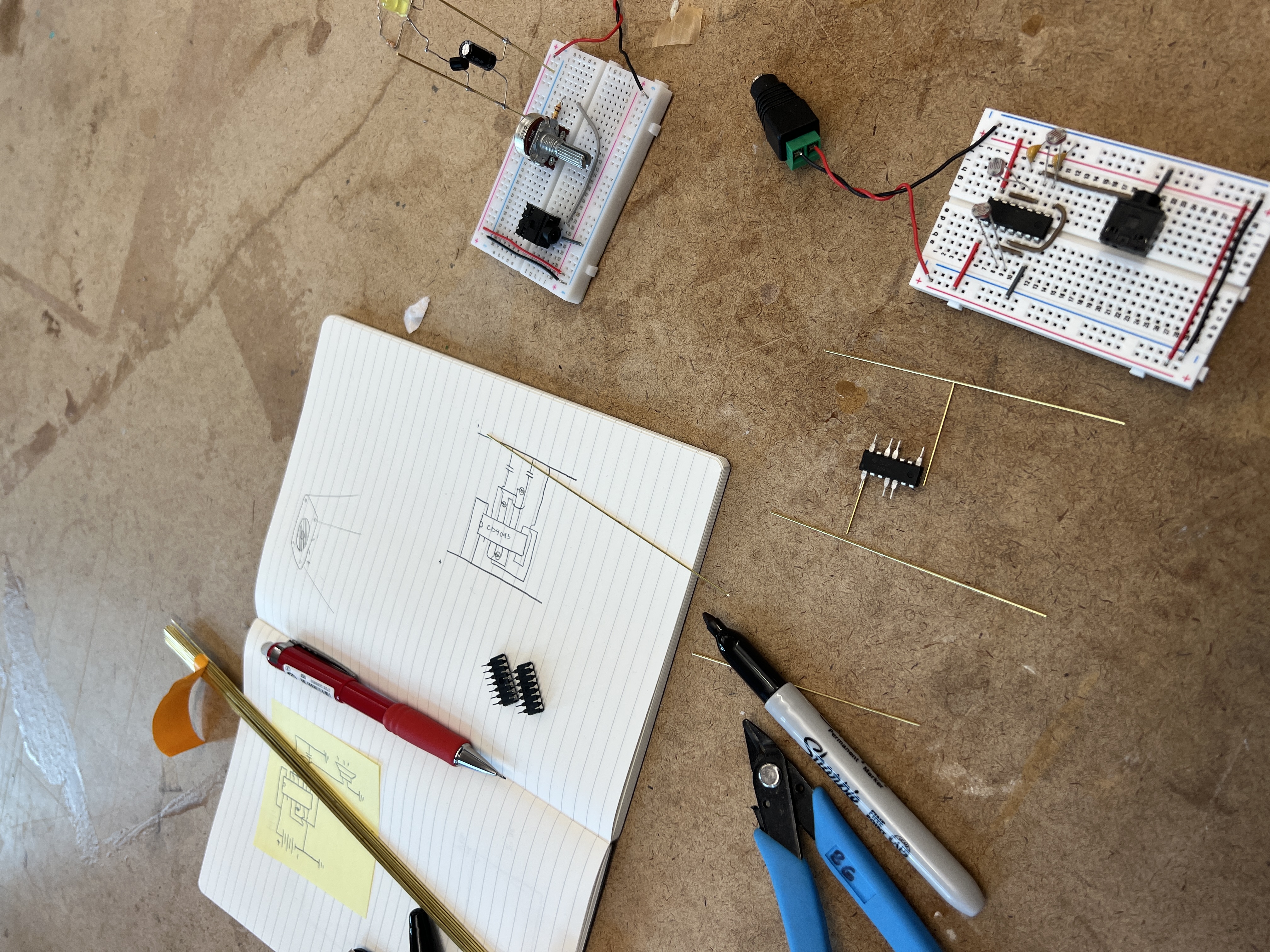
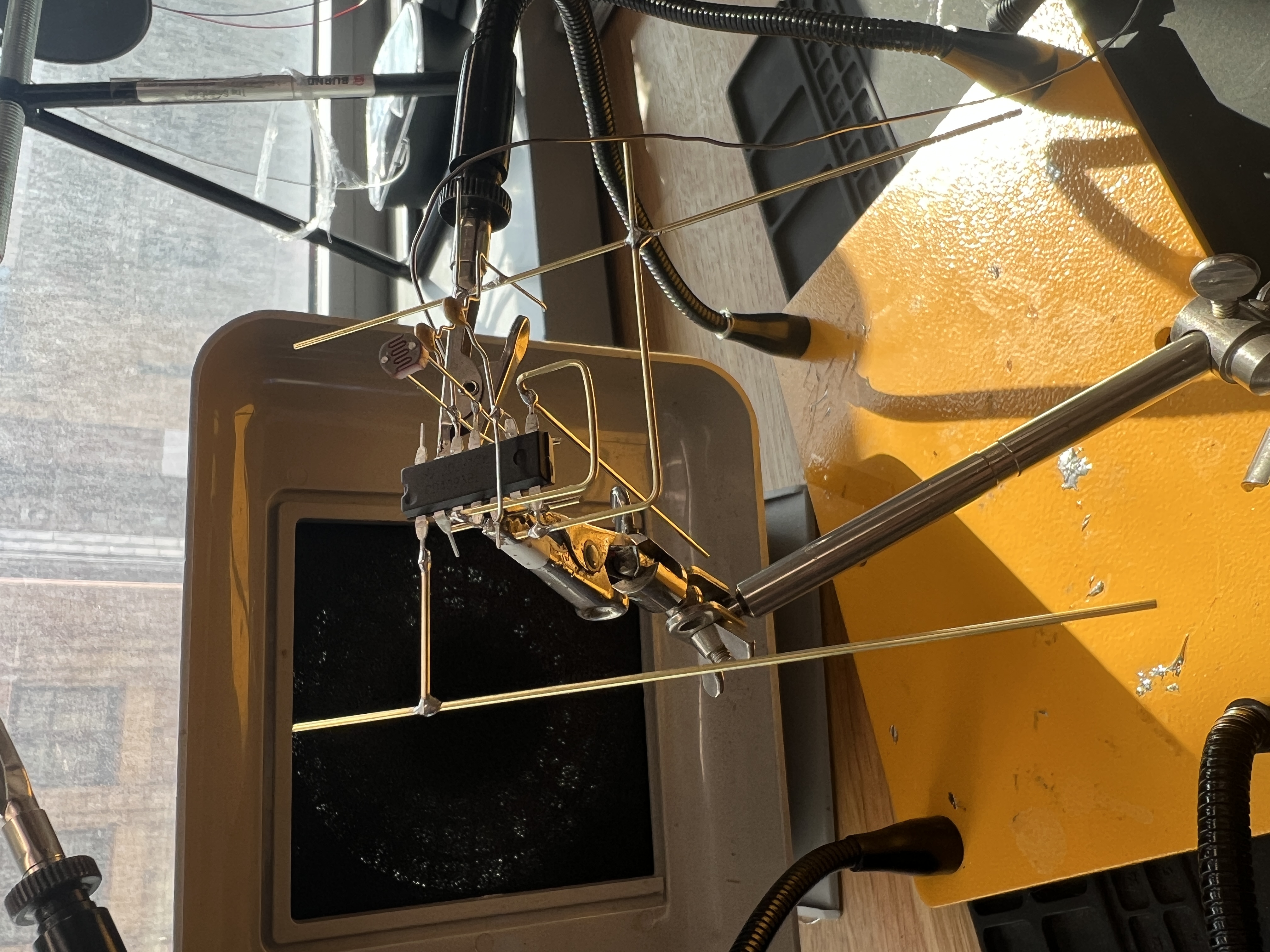
I originally had the idea to create some type of a modular synth using these litte sculptures placed onto wooden blocks
that would snap together using a magnet system and allow you to change combinations of sculptures / circuits.
Below is a sketch I did of what I wanted the finished product to look like at this time (spoiler alert, it didn't end up
looking like this).
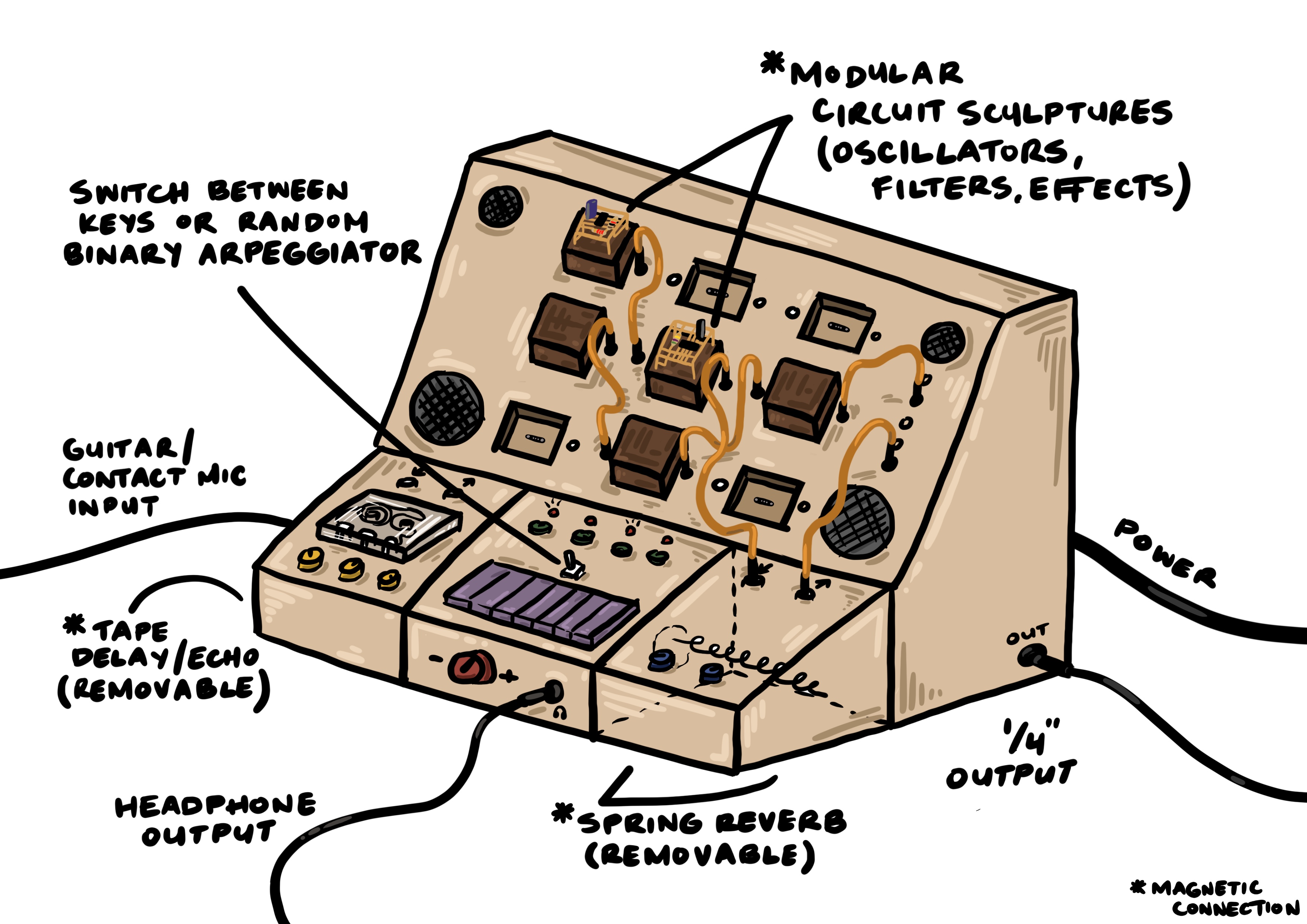
I wanted it to be this pretty structure made out of wood, with all of the modules removable and interchangable.
This idea was inspired by the beautiful pieces that
Love Hulten creates.
I got started by experimenting with different synth-related circuits like a mixer, various oscilators, filters, etc.
A bit of a disclaimer, I have always loved synthesizers and am a fan of analog audio gear, but have
purposefully stayed away from some of these hobbies to avoid a rabbit hole of spending too much money. So with that,
I don't have some of the knowledge regarding these synths (specific terms, names, and whatnot), so I was aiming to
create my own version of a modular synthesizer. And I wanted it to be all analog.
Oscillators, A Mixer, and Whatnot
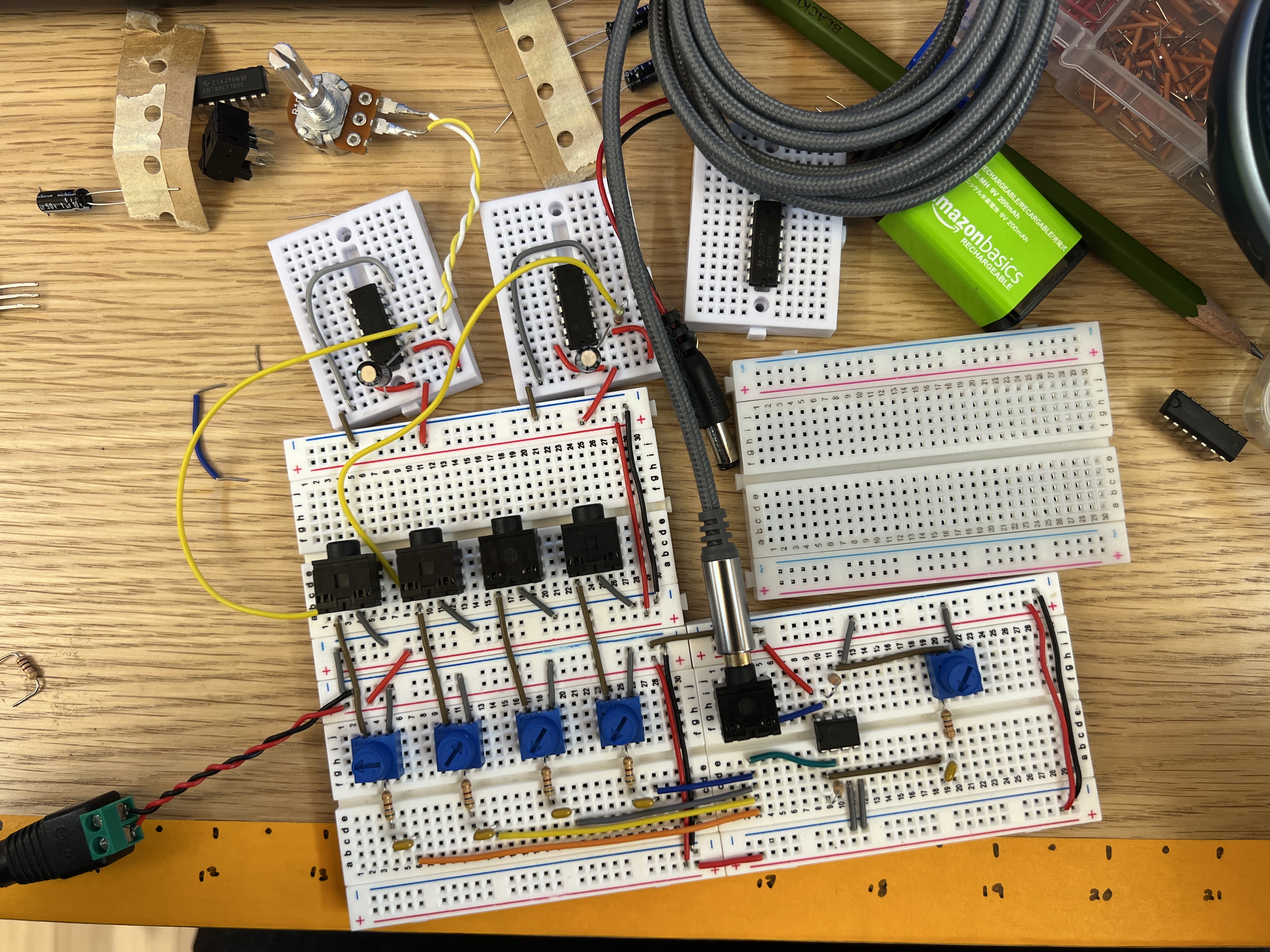
Some of the first circuits I built were small oscillators mostly using a CD4093 NAND Schmitt-Trigger chip and a random audio mixer circuit I found to combine a few different oscillators.
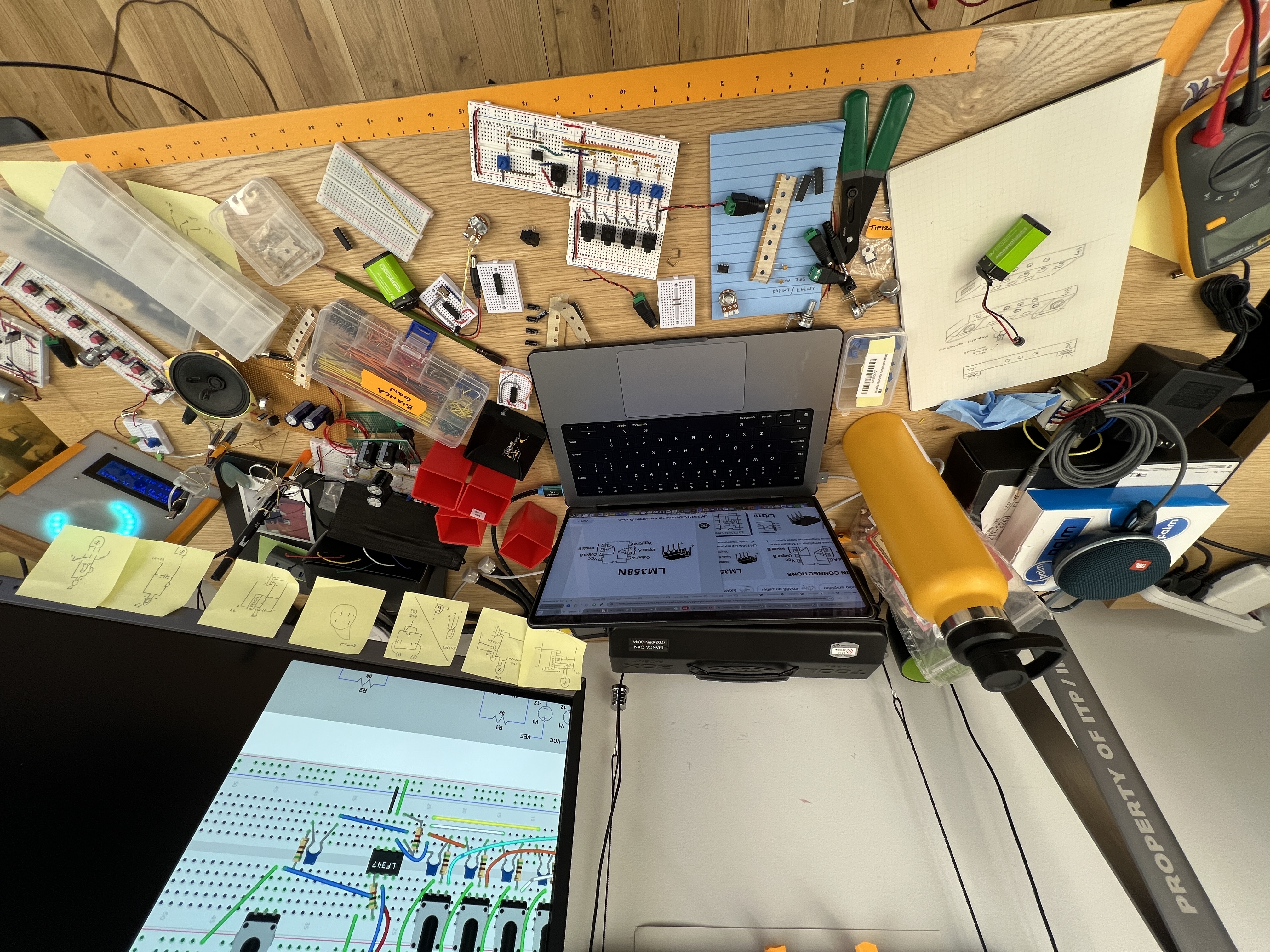
My desk eventually became a 'breadboard farm'.
The Binary Arpeggiator
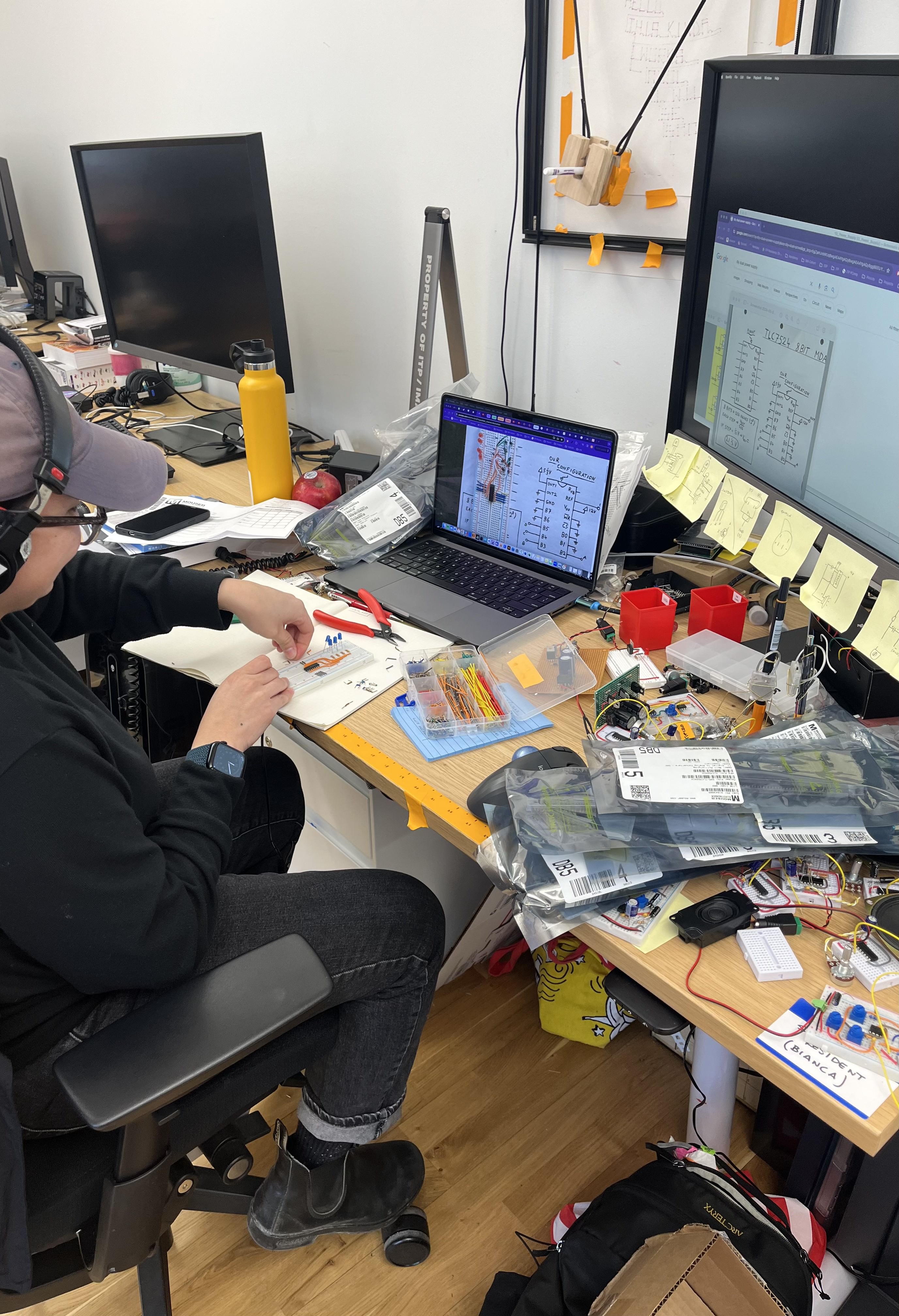
Next, I wanted to venture toward something a little more complex, and that's where I found
Moritz Klein's YouTube channel
, but more specifically his 'designing a DIY synth arpeggiator' series.
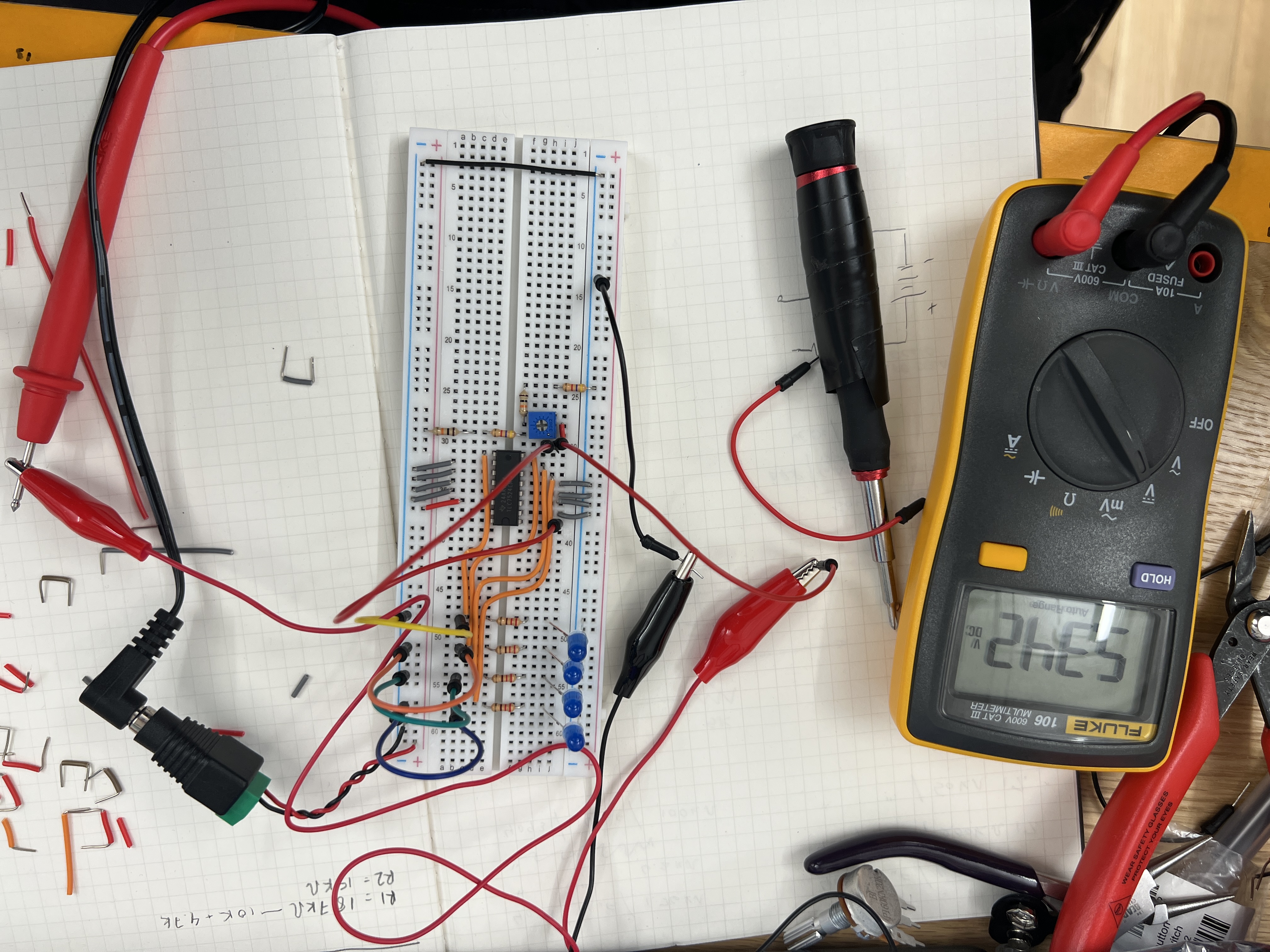
I followed this video series closely, but eventually veered away and integrated my own idea to it. His original arpeggiator
used some logic chips to pass notes only of a C-major scale (I think, it could've been a different key, but I forget).
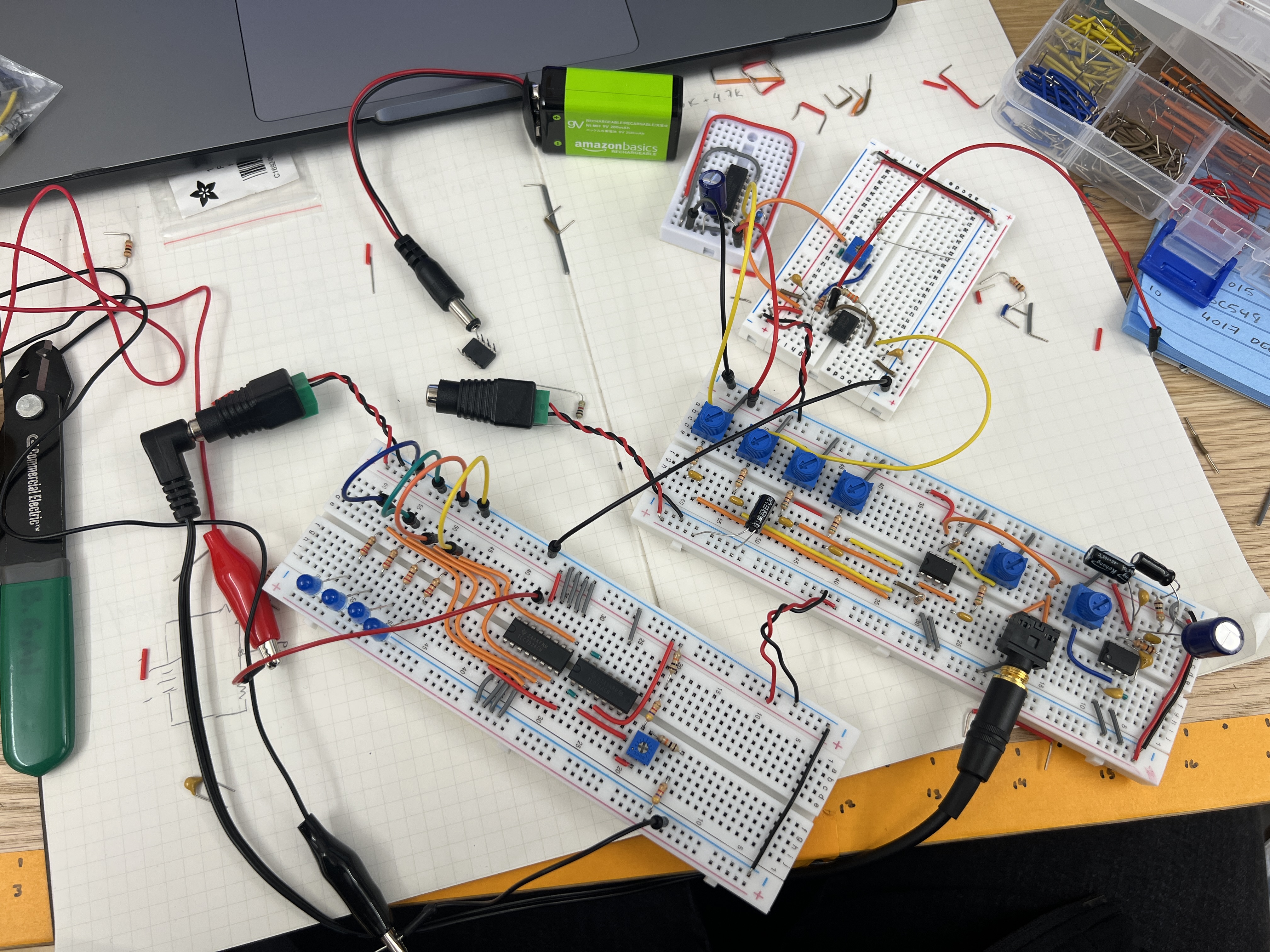
But I wanted this to be interactive, so instead I created four individually controlled LED flashers for each of the four
binary digits / lights.
I went through a couple circuits for an LED flasher, and eventually settled on one that used a 555 timer and only one potentiometer
to adjust the speed.
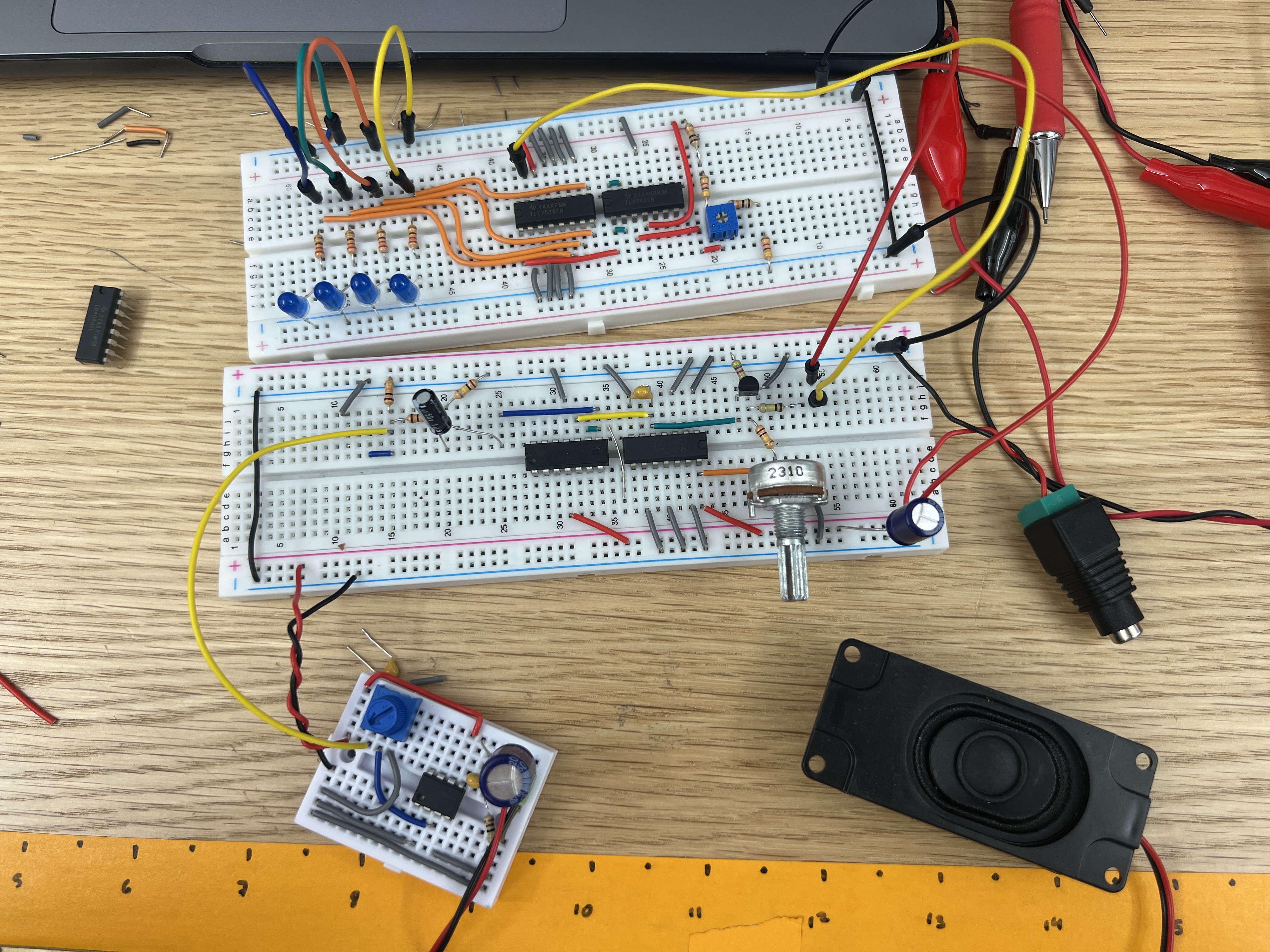
One day I for some reason decided to draw the whole schematic out by hand...
My original idea was to make custom PCBs for each of the circuits...that unfortunately didn't happen,
but for the final / residency show, I did move everything to proto-boards.